There’s something irresistibly satisfying about the crisp bite of Korean pickled radish—that perfect balance of tangy, sweet, and slightly salty flavors that wake up your taste buds. Known as “danmuji” when yellow and “chikin-mu” when served with fried chicken, this simple condiment is a staple in Korean cuisine. It’s served alongside everything from Korean BBQ to spicy fried chicken, and even tucked into kimbap rolls for a bright, crunchy contrast.
What makes this pickled radish so special is its clean, refreshing flavor that cuts through rich or spicy foods. With just a few pantry ingredients and minimal effort, you can make your own batch at home—and once you do, you’ll never want to buy store-bought again.
This easy Korean Pickled Radish recipe delivers the same crisp texture and perfectly balanced flavor you’d expect from your favorite Korean restaurant. Plus, it keeps beautifully in the fridge, ready to complement any meal that needs a touch of zing and crunch.
Recipe Overview
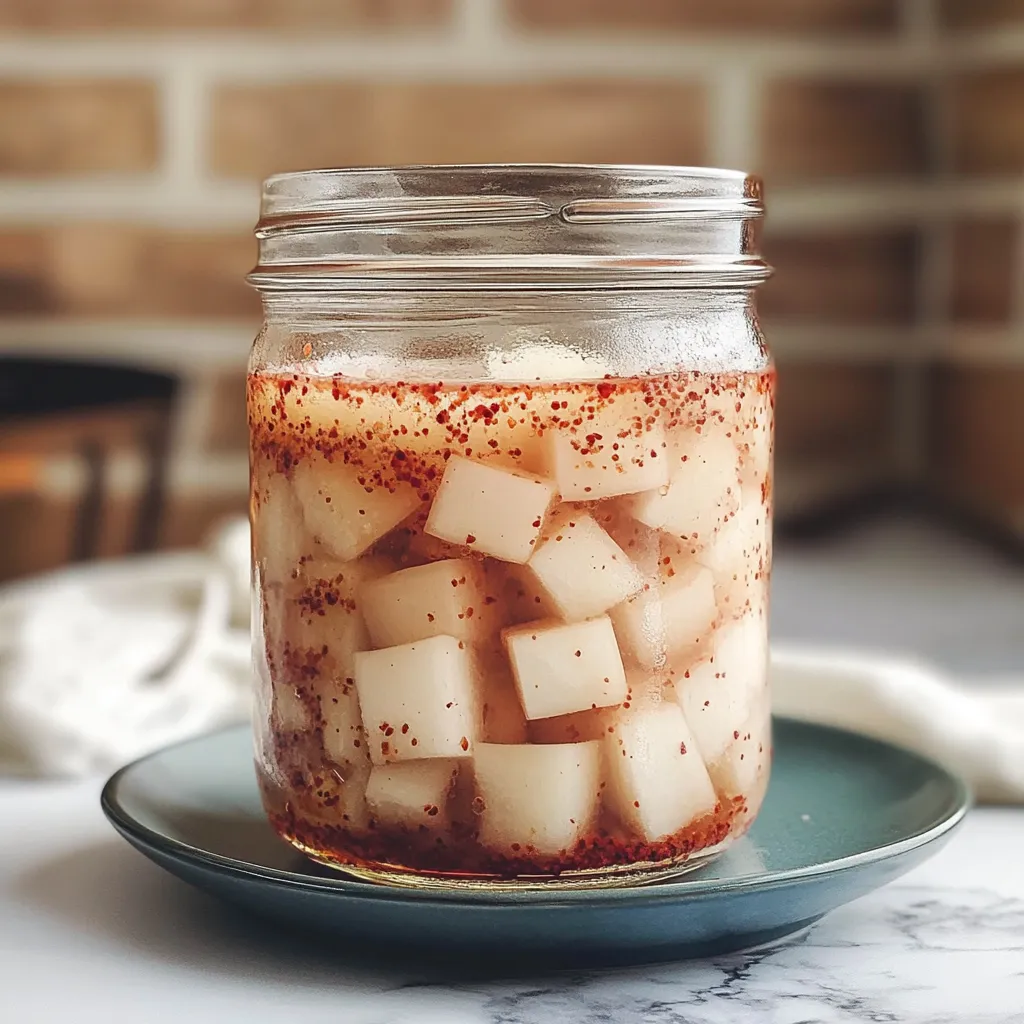
Korean Pickled Radish, or Pickled Daikon Radish, is a quick and easy side dish made from cubed radish soaked in a vinegar, sugar, and salt brine. The result? A crunchy, tangy, slightly sweet pickle that brightens every bite. Whether served with fried chicken, grilled meats, or rice bowls, this simple dish adds freshness and balance to any meal.
Ingredients & Instructions
Ingredients
- 1 lb Korean radish (or Daikon radish)
- ½ cup distilled white vinegar
- ½ cup water
- 3 tablespoons sugar
- 1 teaspoon salt
- 2 garlic cloves, optional
- 1 teaspoon gochugaru (Korean red pepper flakes) or regular red pepper flakes, optional
Step-by-Step Instructions
1. Prepare the Radish
Start by rinsing the radish thoroughly under cold water to remove any dirt. Trim off both ends, peel the skin, and cut it into bite-sized cubes—about ½-inch pieces work best. The cubes should be fairly even so they pickle uniformly.
Place the cut radish cubes into a clean, airtight glass jar. A mason jar works perfectly for this recipe.
Tip: If you prefer thinner slices instead of cubes (for sandwiches or wraps), you can use a mandoline slicer or a sharp knife to cut uniform rounds.
2. Make the Pickling Brine
In a small saucepan, combine the vinegar, water, sugar, and salt. Stir over medium heat until the sugar and salt completely dissolve—this takes about 2–3 minutes. Once dissolved, remove from the heat and allow the liquid to cool to room temperature.
Tip: Avoid pouring hot liquid directly over the radish—it can soften the texture. Cooling helps maintain that perfect crunch.
3. Combine and Flavor
Once the brine has cooled, add the garlic cloves and gochugaru (if using) to the jar with the radish cubes. Garlic adds a mild aroma, while gochugaru infuses a subtle heat and a hint of red color to the brine.
Pour the cooled brine over the radishes until they’re completely submerged. If needed, gently press the radish pieces down with a spoon to ensure they’re covered.
4. Pickle and Chill
Seal the jar tightly and place it in the refrigerator. Allow the radishes to pickle overnight before enjoying them. The flavors deepen beautifully after about 48 hours, becoming more balanced and vibrant.
Your Korean Pickled Radish will stay fresh and crunchy for up to 2–3 weeks when stored properly in the fridge.
Cooking Tips & Variations
The beauty of this recipe lies in its flexibility. With a few small tweaks, you can customize your pickled radish to suit your taste or dish.
1. Adjusting Sweetness and Acidity
If you like a sharper tang, add more vinegar. Prefer it sweeter? Add an extra tablespoon of sugar. The flavor balance is totally adjustable—taste the brine before pouring it over your radish.
2. Spice It Up
For a subtle heat, add gochugaru or red pepper flakes. If you love spice, toss in a few thin slices of fresh chili for a bolder kick.
3. Add a Citrus Twist
A thin slice of lemon or yuzu peel can add a bright, fragrant touch to your pickles, perfect for pairing with fried dishes.
4. Try Different Cuts
Instead of cubes, try thin matchsticks for wrapping into spring rolls, or round slices for topping burgers and sandwiches.
5. Use Rice Vinegar
For a milder, slightly sweeter flavor, swap distilled white vinegar for rice vinegar—a common variation in Japanese-style pickles.
Storage & Serving Suggestions
Storage
- Store the pickled radish in an airtight glass jar in the refrigerator.
- It keeps well for up to 3 weeks, retaining its crisp texture and bright flavor.
- Avoid using metal containers, as vinegar can react with them.
Tip: Always use clean utensils when serving to prevent introducing bacteria that can shorten shelf life.
Serving Ideas
Korean Pickled Radish is a versatile side dish that goes with nearly anything! Here are some delicious pairing ideas:
- Serve it with Korean Fried Chicken (chikin-mu) for that iconic combination of crispy, spicy, and tangy.
- Add it to rice bowls, bibimbap, or bulgogi for crunch and balance.
- Slice thinly and use as a topping for sandwiches or wraps.
- Include it as a side for grilled meats, seafood, or even tacos for a fusion twist.
The bright acidity of pickled radish makes it perfect for cutting through rich or fried foods, refreshing your palate between bites.
Simple, quick, and bursting with flavor, Korean Pickled Radish is one of those small dishes that makes a big impact. With just a few ingredients, you can create a refreshing, tangy side that perfectly complements bold or spicy foods. It’s crisp, colorful, and endlessly adaptable—whether you like it mildly sweet, garlicky, or with a spicy edge.
Once you start making this at home, you’ll find yourself reaching for it again and again. It’s the kind of staple that brightens every meal, adding that unmistakable Korean flair of freshness and balance.
So grab a radish, mix up your brine, and let your refrigerator do the rest—you’ll have delicious homemade pickles ready to impress by tomorrow.
FAQs
1. How long does Korean Pickled Radish last?
Stored in the fridge, it stays crisp and flavorful for up to 3 weeks.
2. Can I use rice vinegar instead of white vinegar?
Yes! Rice vinegar offers a slightly milder, sweeter flavor—great for a softer tang.
3. Why did my radish turn soft?
The brine may have been too hot when poured. Always cool it to room temperature before pouring over the radish.
4. Can I reuse the brine?
It’s best not to reuse it for safety reasons. Make a fresh batch each time for optimal flavor and crunch.
5. What kind of radish should I use?
Korean radish (mu) is ideal—it’s denser and crunchier than daikon. However, daikon radish works beautifully too.
Crisp, tangy, and easy to make—this Korean Pickled Radish (Pickled Daikon) adds a refreshing crunch to any meal. Perfect for fried chicken, BBQ, and rice bowls!